Spoilers below.
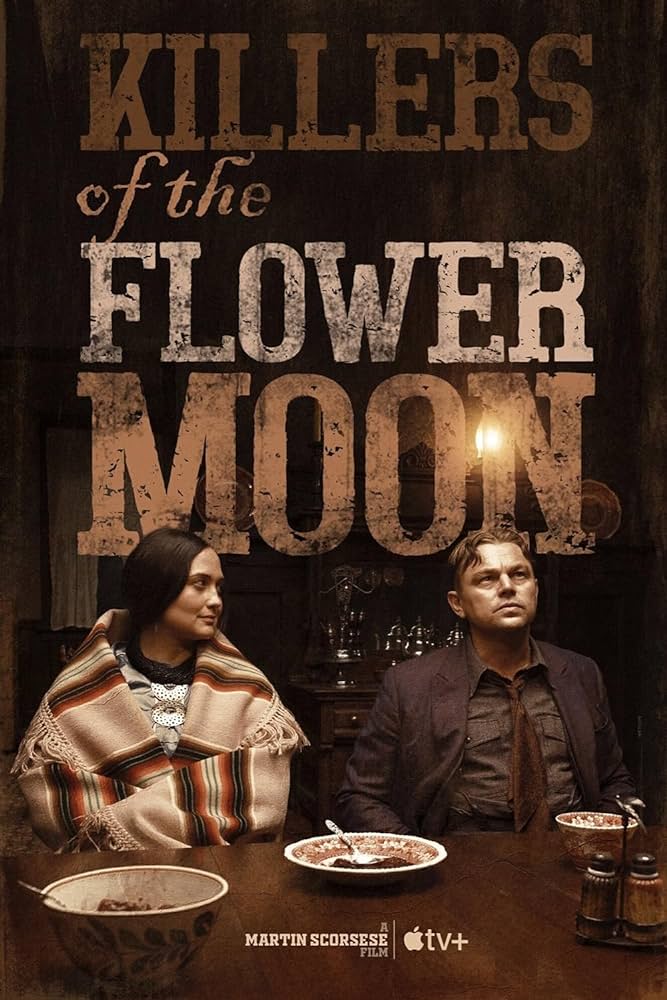
Norman: We’ve got Scorsese
We’ve got DiCaprio
We’ve got DeNiro
We’ve got Lily Gladstone
We’ve got the Osage Nation
We’ve got huge screenplay re-writes
We’ve got brutal violence
We’ve got over 200 minutes of movie.
Killers of the Flower Moon was A LOT to take in. Let’s start simple. Do you think this is top tier Scorsese or something else?
Tyler: I’m tempted to say it’s up there amongst Marty’s all-timers. Then again, I swore for years that The Departed deserved placement in that category. In retrospect, The Departed is a brilliant potboiler. I think it’s fantastic. But it ain’t, well, top-tier. So my judgement can sometimes be off.
That caveat aside, if this movie is as good as it just might be, it’s definitely among his greats.
Norman: It was an overwhelming experience for me. The length is a big part of that. I felt like I was in a place, among characters, enveloped in something bigger than a movie. It manages to be both grand in scale and intimate in its exploration of human nature.
Tyler: Oh, that runtime. So much online kerfuffle. You see that certain moron theater owners are putting their own “intermission” breaks into the film? That’s cause for arrest.
Norman: I would have been fine with an intermission, but that has to be a choice the artists make. And I didn’t see a good clear break in the story to justify it. If you watch, say, The Sound of Music, there’s a very obvious first part and second part. KOTFM is better experienced in one gulp.
I managed to see through the whole thing without going to the bathroom, but you have to make plans for that!
Tyler: I pulled off that same miracle. Praise be for that, as this thing is absorbing and I would’ve been loathe to break the spell.
Norman: So, let’s start with some of the points of controversy and see where we go from there.
What is this movie about?
Is it about the Osage? Is it a three-person character study? Does it do justice to the history?
We may not even be able to answer some of these questions well, but we’ll try anyway!
Tyler: Got that right. One might say it’s about a classically American eradication of indigenous nations, this time through a kind of parlor sexual eugenics, bulwarked by considerable financial reward. There’s beauty in Scorsese’s depiction of Osage rituals and traditions—hell, the tribe’s language is on full display. All of that is, throughout the movie, wiped away by racist opportunists. It would be a bottomlessly depressing watch if it weren’t crafted by these filmmakers.
Speaking to the intimacy you describe, too, it uses its primary characters to tremendous effect. Gladstone is a revelation, while DiCaprio and De Niro deliver performances that rank among their best.
Norman: And even in the hands of Scorsese and Co., this is not exactly a feel-good movie. You are right, though: the pacing, the acting, Schoonmaker’s always glorious editing, made a grinding story into something to behold.
I would like to settle on the performances for a minute if we can.
Tyler: By all means.
Norman: For all the talk about the Osage and historical accuracy, etc, the thing that stood out to me was just how much this is vintage Scorsese. He has long been fascinated with the nature of evil, complex masculine relationships, and violence. The triangular relationship between Gladstone, DiCaprio, and De Niro is really the center and heart of the movie for me. It’s a tale of family power dynamics, cowardice, and trust. And the intimacy of those relationships maps well as a stand-in for bigger national relationships between the American government and Native Americans.
Tyler: Note, too, how De Niro essentially gets away with his crimes, while DiCaprio languishes in jail until he dies. I reckon there’s a splash of class observation mixed into those family power dynamics.
What a tapestry this movie is. This is why I keep flirting with seeing it again.
Norman: I don’t know the actual history, but I think it’s so important that Mollie knows she was poisoned and rejects him, even though she knows he loves her. She recognizes him as a coward and isn’t going to put up with it.
Tyler: Would she have left him had he admitted to the poisoning? DiCaprio’s tortured “Insulin?” is a delivery that stuck with me.
Norman: That’s a great question. I read a genuine love between them and I think there’s a chance she would have taken him back if he had been honest.
Tyler: He’s just so damned dim. I know the New York Times spoiled the movie for tons of people this week by noting that in a headline, but that doesn’t make it any less true.
Norman: He is. That actually gets at one aspect of the performance that I’m not sure about. DiCaprio plays the role with a constant, overdrawn frown, especially in the second half. It almost became caricature for me.
Tyler: That’s another thing I gotta look for when I see this again.
Norman: It doesn’t matter. Leo makes up for the frown by saying “fuck a duck” like no one else can!
Tyler: Any thoughts on Scorsese’s use of musicians in acting roles? Pete Yorn, Sturgill Simpson, Jack White (!), and, most prominently, Jason Isbell. Isbell’s work means a whole lot to me, and I was glad to see him stand up there and deliver a fine performance..
Norman: To be honest, I didn’t recognize them! And I’m glad I didn’t. Sometimes very recognizable people in bit roles can be a distraction. I did notice Jack White and it took me straight out of that closing sequence. I’m spending time trying to place who it is and not concentrating on what’s going on.
Tyler: I only recognized Isbell, and I knew he’d be there going in. The others were revealed to me after the fact. I’m startled that I missed Jack White.
Norman: Same with John Lithgow and Brendan Fraser. I have no complaints about their performances, which were great, but I’d much rather less recognizable actors be placed in smaller roles.
Tyler: I hear that. Feels like Marty’s highlighting those characters by casting known faces. To what end, I remain unsure.
Now, what do you think of the biggest cameo of all? Scorsese, center stage.
Norman: I liked it! It seems like this story resonated with him a lot and he wanted to put his own voice there directly when it came to honoring Mollie. It was touching.
Tyler: I dug it as well. A deserved personal flourish.
Norman: It’s also worth mentioning that whole radio show sequence. The typical coda is just typed up info about the characters after the movie’s proper ending. The radio show format brought some energy to a normally predictable part of the historical/biopic/true story genre.
Tyler: Hey, good point there. It’s a big ol’ left turn, and I like it.
Norman: I appreciated the violence in this movie. We talked earlier about how depressing this movie might have been beyond what it already is, but part of the reason for its sadness is that Scorsese drains all of the violence of any titillation or excitement. The killings are almost dull, which in turn renders them human and sorrowful. This is a sober movie.
Tyler: So your admiration for KOTFM is apparent. I’ll flip your initial question back at you: is this top-tier Martin Scorsese?
Norman: Oh, it’s definitely top tier! Look, it’s deliberate, serious, engrossing, and rich. He asks the audience to be patient and he rewards that effort by giving us something that is multi-layered. The number of potential themes and angles here is astounding. Lily Gladstone is incredible. I have complaints, but they are all minor, personal quibbles. I hope it wins best picture even though the Oscars are stupid.
Any other angles you want to cover on KOTFM?
Tyler: Only that it was a damn fine way to go back to the movies after some time away. Stark dark nature and all.
 Writers' Loom